YEARBOOK

ECONOMIC REPORT

YEARBOOK

ECONOMIC REPORT

In partnership with the Presidencies, the Prime Ministers' Offices, the Ministries and the APIs

Special Country

In partnership with the Presidencies, the Prime Ministers' Offices, the Ministries and the Investment Promotion Agencies

Purchase of advertising space

Drag
Your advertising space orders
Advertising rates
×

Loading...

Media Kit
×

Loading...

General Conditions of Sale
×

Loading...

DRC – Forests, an important reserve of biodiversity

Position
Advertising space selection

Reference

Please select an ad format

You can change the ad format

The file format is not recognized

Drag and drop or click here
to download an ad

Click here to download an ad

Here you can drag and drop or upload an ad

Send the ad up to 8 days after payment
A link will be sent to you by contact@via-agency.media

Reserved space
Announcement transmitted

If you want another location, you can move this ad

Position

Reference

Reference

If you want another location, you can move this ad

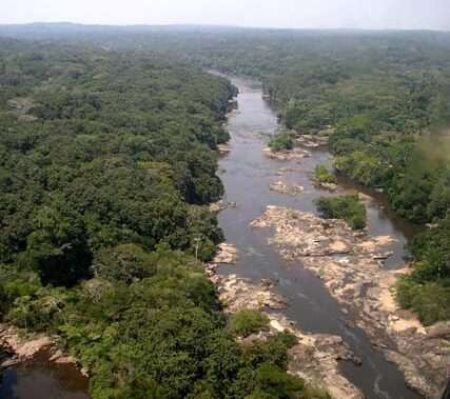
DRC – Forests, an important reserve of biodiversity

Epulu_River_Ituri

The forests of the Congo Basin represent the second largest tropical forest massif in the world after the Amazon basin. Its dense and humid forests cover approximately 200 million hectares, more than half of which are located in the DRC.

Position
Advertising space selection

Reference

Please select an ad format

You can change the ad format

The file format is not recognized

Drag and drop or click here
to download an ad

Click here to download an ad

Here you can drag and drop or upload an ad

Send the ad up to 8 days after payment
A link will be sent to you by contact@via-agency.media

Reserved space
Announcement transmitted

If you want another location, you can move this ad

Position

Reference

Reference

If you want another location, you can move this ad

The DRC's topography is highly diverse, with a large basin in the center and west, bordered to the east and south by high plateaus. The eastern part of the country is dominated by a volcanic chain interspersed with lakes. Vegetation defines three main natural regions: dense rainforest in the central basin and west; dry forests and savannas in the south and along the northern fringe; and mountain ecosystems along the eastern border. With 135 million hectares of forest covering the national territory, the DRC is one of the world's largest forested countries, possessing more than half of the Congo Basin rainforest.

415 mammal species, 11,000 plant species, 1,117 bird species, and nearly 1,000 fish species have been recorded in the Democratic Republic of Congo (DRC) alone. Forest elephants, gorillas, bonobos, and okapis are among the most emblematic species of this extraordinary biodiversity. The DRC boasts five natural sites recognized as World Heritage Sites, more than all other African countries combined. Biodiversity preservation in the DRC is primarily ensured by the protected areas system. It is therefore crucial to manage these areas effectively so that they continue to play their role in preserving ecosystems and biodiversity.

Position
Advertising space selection

Reference

Please select an ad format

You can change the ad format

The file format is not recognized

Drag and drop or click here
to download an ad

Click here to download an ad

Here you can drag and drop or upload an ad

Send the ad up to 8 days after payment
A link will be sent to you by contact@via-agency.media

Reserved space
Announcement transmitted

If you want another location, you can move this ad

Position

Reference

Reference

If you want another location, you can move this ad

The DRC provides humanity with an immense carbon dioxide sequestration service. However, the main drivers of deforestation in the DRC are slash-and-burn agriculture, uncontrolled bushfires, charcoal production for local and regional markets, cattle ranching, and illegal logging. The DRC's considerable natural resources make their conservation and sustainable management a major issue not only for humanity, but above all for the Congolese people. Indeed, these resources contribute critically to their living conditions, particularly for the poorest among them, as well as to the country's economic development.

The forests of the DRC include closed tropical forests, open forests, and wooded savannas. The DRC wishes to review all forest concessions and examine those granted for conservation purposes to capture carbon credits. There are also plans to expand fully protected areas to better preserve biodiversity.

PROTECTED AREAS
Protected areas in the Democratic Republic of Congo consist of 9 national parks and 63 hunting areas and reserves, managed by the Congolese Institute for Nature Conservation (ICCN). They cover 10,471 km³ of the territory.
The 9 National Parks are:
Garamba National Park
Kahuzi-Biega National Park
Kundelungu National Park
Maiko National Park
Mangrove Marine Park
Lomami National Park
Salonga National Park
Upemba National Park
Virunga National Park

Position
Advertising space selection

Reference

Please select an ad format

You can change the ad format

The file format is not recognized

Drag and drop or click here
to download an ad

Click here to download an ad

Here you can drag and drop or upload an ad

Send the ad up to 8 days after payment
A link will be sent to you by contact@via-agency.media

Reserved space
Announcement transmitted

If you want another location, you can move this ad

Position

Reference

Reference

If you want another location, you can move this ad