Reference
Please select an ad format
You can change the ad format
The file format is not recognized
to download an ad
Click here to download an ad
Here you can drag and drop or upload an ad
Send the ad up to 8 days after payment
A link will be sent to you by contact@via-agency.media
Reserved space
Announcement transmitted
Position
Reference
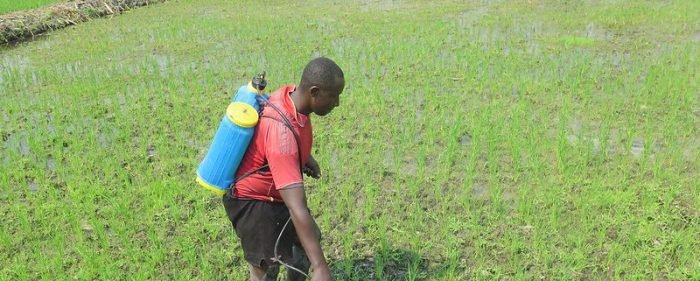
Approximately 80% of agro-industrial products consumed in the DRC are imported. The gradual development of some twenty agro-industrial parks covering tens of thousands of hectares across the country should address this. The Ngandajika Agro-Industrial Development Support Program (PRODAN) has already been launched.
Reference
Please select an ad format
You can change the ad format
The file format is not recognized
to download an ad
Click here to download an ad
Here you can drag and drop or upload an ad
Send the ad up to 8 days after payment
A link will be sent to you by contact@via-agency.media
Reserved space
Announcement transmitted
Position
Reference
The DRC imports $2 billion worth of food products despite its agricultural, hydro-forestry potential, which weighs heavily on its trade deficit. For example, the relative value of imports for some agro-industrial products is 901.3 tons of wheat, 301.3 tons of maize, and 901.3 tons of rice. The diversification of the Congolese economy, which the Head of State has always advocated, has entered a decisive phase. The challenge is to combat malnutrition through these special agro-industrial zones to be established near agricultural production areas. These special zones will be equipped with energy, transportation, and communication infrastructure to foster local value creation through the development of agricultural production chains and their local processing.
African Development Bank (AfDB) capital will be used for agro-industrial development in five special zones across the country. The sites concerned are located in the provinces of Kongo Central, Grand Kasai (Kasai, Kasai Oriental and Central), Grand Katanga (Tanganyika, Haut-Lomami, Lualaba and Haut-Katanga), Grand Bandundu (Kwilu, Kwango and Mai-Ndombe) as well as in the former Orientale province (Bas-Uélé, Haut-Uélé, Tshopo and Ituri).
In November 2021, the African Development Bank (AfDB) granted a $70.76 million loan from the African Development Fund (ADF) to the Democratic Republic of Congo (DRC) to implement the Ngandajika Agro-Industrial Development Support Program (PRODAN) in the central part of the country. The government will contribute approximately $22.37 million in counterpart funding for the program's implementation over five years in Lomami Province, about 1,390 kilometers from Kinshasa. More than one million people, half of whom are farming households, live in this province, where agriculture provides 65.5 million jobs.
PRODAN constitutes the pilot phase of an operation aimed at implementing national policies and strategies to develop agricultural development hubs, through the creation of agro-industrial parks in each of the country's 22 provinces, in order to stimulate annual growth in the agricultural sector of more than 6%.
Reference
Please select an ad format
You can change the ad format
The file format is not recognized
to download an ad
Click here to download an ad
Here you can drag and drop or upload an ad
Send the ad up to 8 days after payment
A link will be sent to you by contact@via-agency.media
Reserved space
Announcement transmitted
Position
Reference
The objective is to reduce poverty, ensure food and nutritional security for rural populations, and create sustainable jobs and incomes. Other expected results include improved access to markets, inputs, and agricultural services. The program targets economically, socially, and environmentally fragile and disadvantaged areas with significant agricultural potential, whose sustainable development will contribute to improving the country's food security.
PRODAN is part of the government's major priority program, which aims to eventually reach all 22 provinces of the country and gradually reverse the trend of food insecurity through the development of special agro-industrial processing zones. This program will directly benefit more than 131,413 households, representing approximately 750,000 people, including 521 full-time equivalent (FTE) positions for women, and indirectly benefit 500,000 farming households. It will lead to the creation and strengthening of approximately 35 small and medium-sized agricultural enterprises, 40,000 direct jobs for young people (18-35 years old), including 301 FTE positions for girls and another 20,000 direct jobs (301 FTE positions for women).
To ensure the sustainability of investments, the participatory and inclusive approach adopted during the project's preparation and evaluation will continue during its implementation phase to involve all stakeholders. Similarly, the "Special Agro-Industrial Transformation Zone (SAZ)" designation will attract the private agro-industrial sector and facilitate market access through investments in roads, equipment and various networks, social and production infrastructure, and access to different communication networks. Another project aims to contribute to the industrialization and development of South Ubangi province, a province rich in agricultural potential for both food crops and perennial crops. Currently, most economic activity remains in the primary sector; therefore, the project's objective is to provide a secure framework where agro-industries can operate freely with tax exemptions associated with special economic zones. This program was launched by USAID in March 2022. The Ubangi Special Economic Zone is located in Buaka. It includes 25,000 hectares of plantations with perennial agricultural products and primary processing industries.
A roasting unit has been established. The project's promoters created the Elikya Foundation, which houses a school with a capacity of 1,300 students, and a hospital center that has become a referral hospital in partnership with the government, comprising 15 pavilions and a capacity of approximately 230 beds. A recreation center is available for those working on the plantation. In terms of infrastructure, there is also an airfield allowing businesses to land directly in the area. Plans include exporting products north via National Route 6 (RN 6), to Zongo, then on to Bangui, and from there to Douala in Cameroon. The river can also be used to transport products back to Kinshasa.
Reference
Please select an ad format
You can change the ad format
The file format is not recognized
to download an ad
Click here to download an ad
Here you can drag and drop or upload an ad
Send the ad up to 8 days after payment
A link will be sent to you by contact@via-agency.media
Reserved space
Announcement transmitted
Position
Reference