


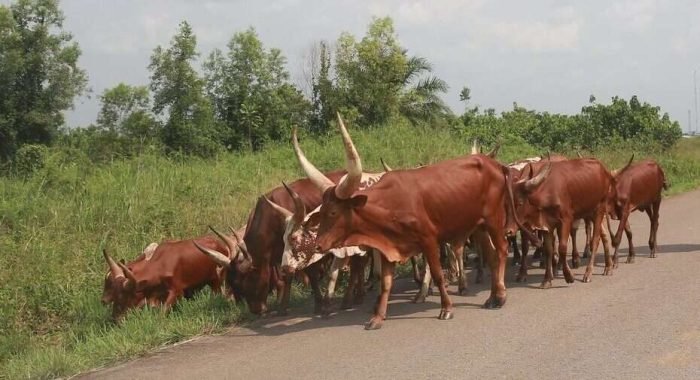
Only 4.5 million hectares are dedicated to livestock farming. However, vast expanses of pastureland could support over 40 million head of cattle. Nevertheless, the national livestock population is highly diversified and dominated by goats in terms of head count: 111,300 cattle, 141,300 sheep, 151,300 pigs, and 601,300 goats.
 The rehabilitation, modernization, and development of the N'Sele Presidential Agro-Industrial Estate (DAIPN) in Lukelenge, Kasai Oriental, financed to the tune of $5 million through the Industrial Promotion Fund (FPI), has revived production in the city of Mbuji-Mayi, located in the center of the country. Its aim is to make the Lukelenge farm a model of a modern agro-industrial project. It sells broiler chickens and more than 180,000 eggs per week on the local market at very affordable prices. Thanks to a public-private partnership between the Congolese government and the Israeli company LR Group Limited, DAIPN has invested in poultry farming, agriculture, and livestock feed production. Every day, LR Group produces poultry feed based on corn and soybeans, some of which is used for its own poultry operation and some of which is sold to other farmers.