Advertising space purchasing interface

Drag
Your advertising space orders
Advertising rates
×

Loading...

Media Kit
×

Loading...

General Conditions of Sale
×

Loading...

DRC – Agriculture, one of the pillars of economic diversification

Position

Reference

Space not available

Reserve this advertising space

The file format is not recognized

Click here for
upload an ad

Click here to download
an announcement

Here drag and drop or
upload an ad

Send the ad up to 8 days after payment
A link will be sent to you by contact@via-agency.media

Reserved space
Announcement transmitted

If you want another location, you can move this ad

Reference

DRC – Agriculture, one of the pillars of economic diversification

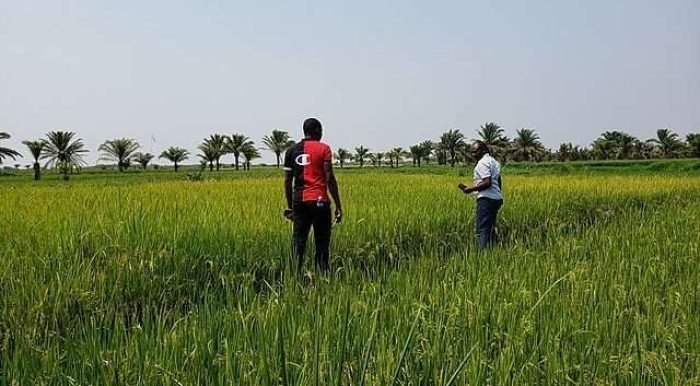
640px-Rice_field_DRC

In the DRC, agricultural potential is among the greatest in the world. According to several experts, agriculture is one of the best opportunities for diversifying the national economy.

Position

Reference

Space not available

Reserve this advertising space

The file format is not recognized

Click here for
upload an ad

Click here to download
an announcement

Here drag and drop or
upload an ad

Send the ad up to 8 days after payment
A link will be sent to you by contact@via-agency.media

Reserved space
Announcement transmitted

If you want another location, you can move this ad

Reference

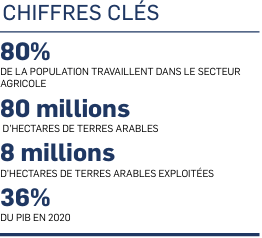
According to the African Development Bank (AfDB), the Democratic Republic of Congo (DRC) currently exploits 8 million hectares of arable land, or 101 TPH of its potential, which is the second largest in the world after that of Brazil.

President Félix Tshisekedi has called on the government to provide support for the development of this sector. He urged the government to promote and coordinate the transformation of the country's abundant natural resources, such as the availability of 80 million hectares of arable land, a dense population, and proven experience in the production of rice, cassava, potatoes, and corn in certain regions. As an example, starting in 2023, the government's food purchases, as well as those of the Presidency, must prioritize locally produced agricultural products.

In the DRC, over 501,000 metric tons of fruit and vegetable production is lost due to a deficient value chain, particularly in storage and transportation. Supply fails to meet the abundant demand. To revitalize agriculture, prior investment in electricity and roads or transport routes is essential; this is the only way to boost the agricultural and livestock sector and create jobs for young people.

With the vision of creating a transformed agricultural sector that generates wealth and creates jobs, President Tshisekedi initiated a program called the Agricultural Transformation Agenda (ATA-DRC). This program addresses a wide range of aspects, including value chains for food and perennial crops, as well as infrastructure. The program will be implemented by the International Institute of Tropical Agriculture (IITA). Activities will be rolled out in several phases, the first of which covers the period 2022-2023.

In concrete terms, this program is structured around priority areas allowing for a rapid impact, namely the revival of the seed sector for cassava, maize, rice, soybean and bean crops, as well as the strengthening of the capacities of agricultural management bodies put in place by the voluntary agricultural program (PVA) under its coordination, managed by the company Bio Agro-Business (BAB).

Position

Reference

Space not available

Reserve this advertising space

The file format is not recognized

Click here for
upload an ad

Click here to download
an announcement

Here drag and drop or
upload an ad

Send the ad up to 8 days after payment
A link will be sent to you by contact@via-agency.media

Reserved space
Announcement transmitted

If you want another location, you can move this ad

Reference

The focus of this program is: the execution of the 145 Territories Development Project (PDL-145T), advocacy and promotion efforts for bread flour in bakeries and pastry shops by the Integrated Emergency Development Program Support Unit (CAPUIDC), the USAID-funded project for the management and control of brown streak disease for the development of healthy cassava varieties that are tolerant and resistant to the cassava brown streak disease present in the DRC, and the World Bank-funded Integrated Agricultural Growth Project in the Great Lakes (PICAGL), which aims to increase agricultural productivity in the eastern part of the country, which has suffered from wars, and to improve regional agricultural integration between the DRC and Burundi; the Youth Entrepreneurship in Agribusiness Project (PEJAB) financed by the African Development Bank, interventions in the prevention and control of the fall armyworm attacking maize with financial resources from USAID, the regional SISCA project, financed by IFAD, of which the DRC is among the 3 beneficiary countries, which operates in strengthening a public-private partnership for the supply of quality seeds at low prices.

Other projects are awaiting start-up such as: the National Agricultural Development Programme (PNDA) financed by the World Bank, which aims to reduce rural poverty while restoring and modernizing agricultural production systems and mobilizing significant investments in the agricultural sector; the fight against cassava necrosis diseases; and the processing and marketing of agricultural products, with women and youth as priority targets, are also included in this agenda.

For the 2022 financial year, the credits planned for the agricultural sector are estimated at more than 684.6 billion CDF or 342.3 million dollars. 

An agricultural biotechnology laboratory in Kalambo

Located in eastern Democratic Republic of Congo, 15 kilometers from the city of Bukavu, the Kalambo station specializes in processing cassava into various products such as biscuits and cakes. To promote local consumption and ensure food security, an agricultural biotechnology laboratory was built and inaugurated there in 2019. This laboratory, part of the International Institute of Tropical Agriculture (IIAT), the second of its kind in Africa after the one in Nigeria, diagnoses problems affecting crops including cassava, bananas, maize, and soybeans, in order to find solutions. 

Furthermore, the aim of creating this laboratory is to support local and governmental initiatives. Indeed, the PICA project and the World Bank have played a technical assistance role in this project. These two institutions will work with the government, INERA (National Institute for Agronomic Research and Studies), and SENASEM (National Seed Service) to assist and implement the best technologies, seeds, and agricultural practices for the beneficiaries. Finally, partnerships are being established to provide theoretical and practical training to Congolese professionals. 

Position

Reference

Space not available

Reserve this advertising space

The file format is not recognized

Click here for
upload an ad

Click here to download
an announcement

Here drag and drop or
upload an ad

Send the ad up to 8 days after payment
A link will be sent to you by contact@via-agency.media

Reserved space
Announcement transmitted

If you want another location, you can move this ad

Reference