


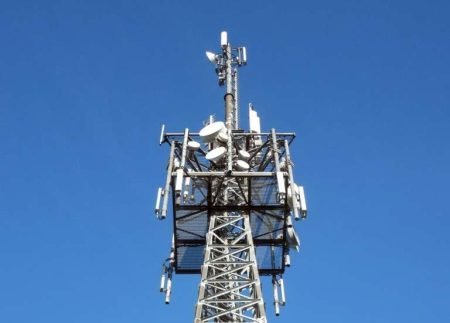
The government has launched a major project to modernize the network of telecommunications of the public administration.
As part of the Malagasy public administration's digitization program, the Minister of Posts, Telecommunications and Digital Development (MPTDN) will modernize the state's telecommunications network. The project, awarded to Huawei, will be financed to the tune of USD 47.2 million by the Export-Import Bank of China.
To provide the public administration with a modern fiber optic and LTE network with secure infrastructure, new technologies will be deployed and put at the service of the public administration (artificial intelligence, data center, surveillance camera, video conferencing, email, IP telephony).
The project to modernize the State's telecoms network aims at several objectives, including the efficiency of the administration with the establishment of inter-ministerial communication networks and a secure mobile network; the facilitation of inter-departmental data exchanges by limiting the risks related to cyberattacks; the optimization of public spending on communications; the strengthening of public security; the improvement of the management of urban telecoms traffic; the promotion of the digital culture of the administration.
Several operators now make up the telecommunications sector in Madagascar.
The historical operator, Telma, holds a certain monopoly: vertically through the monopoly of fiber serving all of Madagascar and horizontally, through the holding of the mobile license, the fixed telephony license and the data transmission license.
In terms of mobile and internet technology performance, Madagascar faces a paradoxical situation. Unlike many sub-Saharan African countries, it has a low mobile penetration rate, estimated at only 45,631 TEUs in 2019 by the Regulatory Authority for Communication Technologies (ARTEC). As for internet penetration, it has shown steady growth in recent years but was estimated at around 11,601 TEUs in 2019, despite Madagascar having significantly better broadband internet quality than countries such as Kenya, South Africa, or Ghana, thanks to the EASSy submarine cable network.