


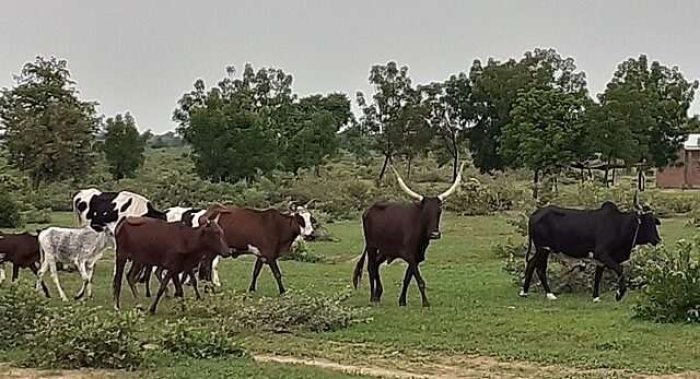
 The positive performance of the livestock sector can be attributed to the results of the third phase of the mass vaccination campaign for small ruminants, launched by the government at the end of 2021. Supported by the World Bank, which notably finances the Livestock Development Project, and the FAO, the operation aims to preserve 110 billion CFA francs in capital, as well as the incomes of livestock farmers, who can thus contribute to ensuring food security in the country. In its mission to promote and develop livestock farming, the Animal Production Development and Management Company (SODEPA) has established a system of ranches and agro-pastoral development zones. It is also responsible for fostering pastoral vocations. Regarding beef, the government's various forms of support maintain a fluid market, with strong demand for meat products. To improve the genetic potential of the national herd, the government plans to import 360 purebred pigs. The supply will be made in three batches for a total budget of 5.5 million CFA francs, benefiting pilot farms located in the Central, Littoral, and Western regions. Some producers regret the exclusion of the Far North region from the project, the main pork-producing area in Cameroon, which alone accounts for 601,000 metric tons of the national production annually. Twelve pilot breeding farms will be authorized to carry out intra-breed crossbreeding to perpetuate the purebreds received, and six pilot multiplication farms will be responsible for reproducing these pigs to supply other production units in the country with the expected quantities and quality of pork. This rejuvenation process, launched in 2014 with the support of several foreign donors such as the African Development Bank (AfDB), has already resulted in the distribution of nearly 6,000 piglets to farms across the country. The Cameroon Farm Company (CFC), the new subsidiary of the SABC group, intends to contribute its expertise to improving the supply of animal feed by establishing a parent farm that will produce 112,500 hatching eggs per week and a hatchery capable of producing 90,000 day-old chicks per week. On a 2-hectare community agroecological farm, the Keur Kamer association recently built a livestock unit (sheepfold and technical facilities) equipped with solar energy and water.
Highly prized by gourmets in Cameroon, snail farming is attracting not only agricultural entrepreneurs but also the cosmetics industry. This is a boon for snail farmers who offer training to promote this still relatively uncommon sector.