


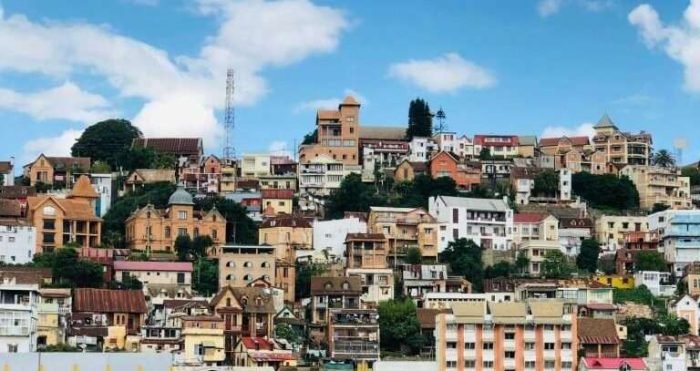
The Great Island is among the top three countries most exposed to tropical cyclones in the world and is even number one on the African continent.
When the country is struck by these natural disasters, the losses in the infrastructure sector are always colossal, reaching approximately 751,300 tons of combined losses. To address this, the Emergency Prevention and Management Unit (CPGU), supported by the World Bank, launched TRACK II, a project that focuses primarily on the building, housing, and land-use planning sectors.
After a five-year trial period and implementation of the aforementioned rules and guidelines, the Malagasy government, under the auspices of the Ministry of Territorial Development and Housing, through the CPGU (National Construction Project Management Unit) and with the support of the GERCO consulting firm, has developed the "National Standard for the Construction of Buildings Resistant to Natural Hazards in Madagascar." This activity falls within the framework of the technical assistance activities of Phase 1 of the Pilot Program for Climate Resilience (PPCR), financed by the Climate Investment Funds (CIF) and implemented by the CPGU with support from the World Bank (Grant Agreement TF0A5362).
The main innovations concern the consideration of natural hazards such as wind, rain and flooding, landslides and earthquakes, sea spray, as well as the wind and earthquake design basis. This standard was officially validated in September 2019.
The National Academy of Arts and Culture (ANAC)
Through ANAC, Madagascar will have its first large-scale infrastructure dedicated to arts and culture training in 2021.
This presidential project, built within the grounds of the Ambohitsorohitra State Palace, will provide training in various fields, including visual and plastic arts, performing arts, public speaking, film and photography, singing and dancing, as well as cultural heritage preservation, the preservation of Malagasy traditions, and cultural communication. The ANAC will also have a large exhibition hall and a performance hall capable of hosting a variety of cultural events and performances. Ultimately, the ANAC aims to train professionals in the arts and culture sector. Beyond its professional training mission, the ANAC also aims to support and promote Malagasy culture internationally.
The National Centre for Musical Education and Dance of Madagascar (CNEMD) will open, after renovations, in early 2021, followed by the opening of ANAC; these two structures will be interconnected in the field of music and dance.