Advertising space purchasing interface

Drag
Your advertising space orders
Advertising rates
×

Loading...

Media Kit
×

Loading...

General Conditions of Sale
×

Loading...

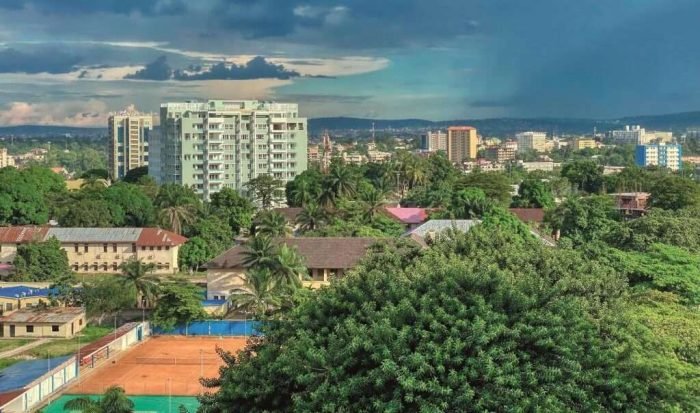
DRC – Making water resources profitable

Position

Reference

Space not available

Reserve this advertising space

The file format is not recognized

Click here for
upload an ad

Click here to download
an announcement

Here drag and drop or
upload an ad

Send the ad up to 8 days after payment
A link will be sent to you by contact@via-agency.media

Reserved space
Announcement transmitted

If you want another location, you can move this ad

Reference

DRC – Making water resources profitable

52096419631_a52e4d668d_o

Despite the country's potential in water resources, only 301% of the population has access to drinking water. To address this shortage, several projects are being implemented, including boreholes and public water fountains.

Position

Reference

Space not available

Reserve this advertising space

The file format is not recognized

Click here for
upload an ad

Click here to download
an announcement

Here drag and drop or
upload an ad

Send the ad up to 8 days after payment
A link will be sent to you by contact@via-agency.media

Reserved space
Announcement transmitted

If you want another location, you can move this ad

Reference

In the DRC, only one in five inhabitants has access to drinking water. The causes are numerous: insufficient financial resources for the sector, dilapidated existing infrastructure, poor network management, and uncontrolled population growth in cities and their surrounding areas. REGIDESO, the public entity that manages drinking water networks in urban areas, is unable to keep pace with this rapid growth. For example, in Kinshasa, the CPA-Mushie neighborhood in the Mont Ngafula district regularly faces water shortages.

In rural areas, the National Rural Water Supply Service (SNHR) has long lacked the resources to fulfill its mission. However, within the framework of the Socio-Economic Infrastructure Strengthening Project (PRISE), a budget of $32 million was allocated to complete the infrastructure, particularly the provision of drinking water in rural areas of the Kasai-Oriental province. Three mini-drinking water networks were commissioned in August 2022 in the localities of Miabi and Lupatapata. PRISE is financed by the African Development Bank (AfDB) in partnership with the government. In addition to the Kasai-Oriental province, nine other provinces in the DRC will be equipped with mini-drinking water networks. The direct beneficiaries of the Socio-Economic Infrastructure Strengthening Project are the rural population, estimated at 870,908 people by the AfDB.

Position

Reference

Space not available

Reserve this advertising space

The file format is not recognized

Click here for
upload an ad

Click here to download
an announcement

Here drag and drop or
upload an ad

Send the ad up to 8 days after payment
A link will be sent to you by contact@via-agency.media

Reserved space
Announcement transmitted

If you want another location, you can move this ad

Reference

The DRC produced 71.3 million m³ of drinking water during the first quarter of 2022, according to the Central Bank of Congo (BCC). This compares to 70.2 million m³ of drinking water produced during the same period last year.

By comparing the two periods, a clear improvement in drinking water supply is evident in the first quarter of this year, with an increase of over 1.1 million m³ compared to the same period last year. For the entire year of 2021, drinking water production in the DRC was estimated at 285.9 million m³. According to a recent report published by UNICEF, more than 38 million Congolese, representing 53.51% of households in the DRC (111% globally), draw their daily water from a river, lake, or other unsafe source. This water is used for cooking, washing, and especially drinking. Due to difficulties accessing safe water, populations are exposed to all kinds of waterborne diseases, including cholera.

 THE URBAN DRINKING WATER SUPPLY PROJECT (PEMU) 
 
The first objective of the Urban Water Project (PEMU) is to increase access to water in selected urban areas. This component is achieved through specific investment and rehabilitation programs in Kinshasa, Lubumbashi, and Matadi. These investment programs primarily aim to improve water production capacity, upgrade the distribution system, and finance individual connections and collective distribution systems. The second component of the project supports sector reform, capacity building, and improved governance. By contributing to the sustainability of the funded investments, the PEMU will help ensure the operational and financial viability of REGIDESO (the national water utility) by enabling it to also initiate the rehabilitation of other centers across the country using the cash flow generated in profitable centers, thereby extending water supply to cities not benefiting from the investments of the first component. 
Thanks to the urban drinking water supply project (2008-2021), more than 88,000 new private connections and 450 new community water points have been installed in Kinshasa, Lubumbashi and Matadi, ensuring access to drinking water for more than 3 million people.
 

Position

Reference

Space not available

Reserve this advertising space

The file format is not recognized

Click here for
upload an ad

Click here to download
an announcement

Here drag and drop or
upload an ad

Send the ad up to 8 days after payment
A link will be sent to you by contact@via-agency.media

Reserved space
Announcement transmitted

If you want another location, you can move this ad

Reference