Reference
Please select an ad format
You can change the ad format
The file format is not recognized
to download an ad
Click here to download an ad
Here you can drag and drop or upload an ad
Send the ad up to 8 days after payment
A link will be sent to you by contact@via-agency.media
Reserved space
Announcement transmitted
Position
Reference
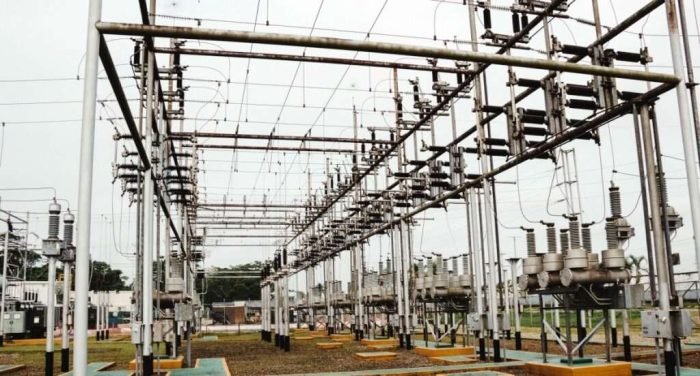
The electricity sector has been liberalized since 1999, promoting free competition for production and installing a regulator. The national rate of access to electricity is 15% and only 5,21% in rural areas. Support from the international community strengthens the sector's dynamics and secures investments.
Reference
Please select an ad format
You can change the ad format
The file format is not recognized
to download an ad
Click here to download an ad
Here you can drag and drop or upload an ad
Send the ad up to 8 days after payment
A link will be sent to you by contact@via-agency.media
Reserved space
Announcement transmitted
Position
Reference
Many sectors, such as tourism, agriculture, agri-food, and telecommunications, are counting on the development of the electricity sector to bolster their growth. For businesses, power outages represent a source of additional costs, as these outages force economic operators to rely on generators. Furthermore, the high cost of energy in Madagascar, among the highest in Africa, undermines the country's competitiveness as an investment destination. Unstable and expensive energy remains a deterrent to investment. However, Madagascar possesses considerable renewable energy potential (hydroelectric, solar, wind) that has not yet been sufficiently developed. Within the framework of the General State Policy (PGE) and the National Plan for the Emergence of Madagascar (PEM), the plan is to reach an electrification rate of 501 TWh by 2023 and 701 TWh by 2030.
Universal access to reliable, sustainable, and affordable energy services is a key priority among the seventeen objectives of the 2015 New Energy Policy (NEP), which established the framework and objectives for the deployment of renewable energy. Since 2017, the new Electricity Code has completed a process of simplifying procedures and strengthening market liberalization, particularly in transmission and distribution.
By developing its hydroelectric power, Madagascar is reducing its dependence on fossil fuels, the import costs of which weigh significantly on the country's economy and the financial viability of JIRAMA, the national water and electricity company.
Through the Ministry of Energy, the Rural Electrification Development Agency (ADER) implements the rural electricity sub-sector policy. ADER develops projects based on indicative master plans in all 22 regions. It promotes economically viable, competitive, and more efficient alternative energy sources to serve households and production units, while developing a public-private partnership system by mobilizing all necessary financial resources to fund investments.
Reference
Please select an ad format
You can change the ad format
The file format is not recognized
to download an ad
Click here to download an ad
Here you can drag and drop or upload an ad
Send the ad up to 8 days after payment
A link will be sent to you by contact@via-agency.media
Reserved space
Announcement transmitted
Position
Reference
STRENGTHENING AND INTERCONNECTION OF NETWORKS The Project for the Interconnection and Reinforcement of Electric Power Transmission Networks in Madagascar (PRIRTEM) provides for the electrification of localities in order to reach the national electrification rate of 70% by the year 2030.
The PRIRTEM project aims to interconnect the three major electricity grids: Antananarivo, Toamasina, and Fianarantsoa. The African Development Bank (AfDB) is financing Phase 1 (PRIRTEM-1) to the tune of €32.5 million. This phase focuses on strengthening and interconnecting the two existing grids of Antananarivo and Toamasina, as well as electrifying towns and rural areas along National Route 2 (RN 2). The project, estimated at €203 million, is also co-financed by the EU, the EIB, KOXEIM (Kanu Overseas Exim), and the Malagasy government. Its implementation is expected to last 48 months.
The 267km, 220kV power line between Antananarivo and Toamasina will cross three regions. With a capacity of 120MW, including the electrification of rural communities along the high-voltage line corridor, it will ensure a reliable electricity supply while facilitating the development of large hydroelectric projects.
Reference
Please select an ad format
You can change the ad format
The file format is not recognized
to download an ad
Click here to download an ad
Here you can drag and drop or upload an ad
Send the ad up to 8 days after payment
A link will be sent to you by contact@via-agency.media
Reserved space
Announcement transmitted
Position
Reference